Madrasah: Should I enrol my child there?
- Nurfadhilah AB

- Jan 18, 2023
- 6 min read
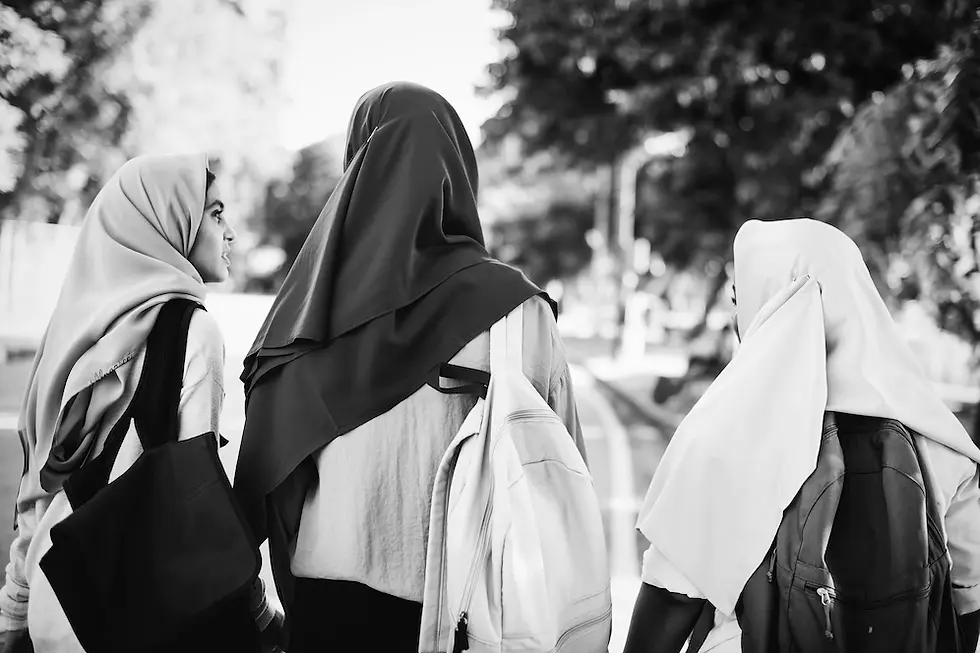
Article reflects an honest review about what it takes to be a Madrasah student, and a parent.
Salaam everyone. By now, some of you might actually have intentions and ideas on how you want your child to learn and the kind of environment he/she will be in. You did your research on the schools around, its syllabus, and most importantly the subject load. But, have you thought about how will it be for the child who will be going through this system? Are you ready to embark on this journey with your child and what it takes to keep up with the amount of knowledge and information that your child will be learning?
I went through Madrasah education from primary 1 to secondary 4 (1994-2003) where most of my childhood memories were formed. Distinctly over the years, Madrasah has reformed its standards, admission process, teaching styles and teacher training, although there are still rooms for improvements (which system doesn't?). Alhamdulillah for this progress.
Now here comes the reality check (the least from me). As a madrasah student, it was challenging for me to cope with the multiple subjects generally due to the limited curriculum hours to cover the syllabus, and with respect to our differences in intellectual capacity. By the time I came back home from school, I had to complete the school homework, and to attend tuition and another external religious program that my parents enrolled me in on certain days of the week.
I wasn't alone in this. I knew my friends were in this shoe as well. Do we have a choice back then as a child? We actually had limited authority to decide which school we can go to as we were young. As much as we trusted our parents when we were younger, we learnt that there were more to learn academically and religiously as we entered secondary level. This time, I noticed my friends who struggled to understand the subject matter broke down, rebelled, played truant, involved in BGR or adopted unhealthy ways of coping which may or may not lead to mental illness. If you find this surprising, then this is another reality check; that madrasah students too face the demands of studies, societal expectations and peer pressure. We have to reconcile the different ways of living in a secular state, be mindful of our actions as we reflect the identity of Muslims (evident through the school uniform), and manage the expectations of our family who trust that we should know how to differentiate between the lawful and prohibited (hence not to act upon frivolities otherwise it will be shunned). Yes, it's the added pressure, although mostly is hidden in our mind.
Well, here comes the good part. Growing up, I believe my parents had good intentions and reasons to enrolling me and my younger sister in Madrasah. They had other 4 children who weren't in that system, hence in a way, I was their first hope. Somehow; according to my mother; I was the one who chose to be in an Islamic preschool as I didnt want to wear skirt (I was already enrolled in neighborhood PCF which was named PAP back then). And the rest was my parents' effort to ensure that I got accepted in Madrasah as a primary 1 student after my Kindergarten years in an Islamic preschool. How can a little me back then knew how to choose? MasyaAllah it was definitely a path that Allah put me into, with the blessings of my parents. My point is, the intention that my parents made to ensure I was given madrasah education influence who I am right now. The barakah of learning Islam, in an institution that was established by an 'alim/'ulama is multifold, SubhanAllah.
Let me continue the challenges that your child might face. Not to dismiss that it might be different and better insyaAllah for your child now, but I wanted to share with you how I decided to embark on Counselling Psychology after i graduated from IIUM with Bachelor Degree in Human Sciences (Psychology and minor in IRK). Remember the part about every system has rooms for improvement? As a young blood, I was also eager to help my alma mater improve or support Madrasah system as a whole. I chose to complete my master dissertation in 2014 in understanding counselling and guidance practices in madrasahs in Singapore, hoping to fill in the gaps for services, and help readers understand the unique approach that our religion has with regards to madrasah education in building students' capacity and resilience (paper accessible with permission from NTU research database, or through me).
Here comes the third reality check, as my research entailed scientific study and its methods, I gathered that despite the madrasah approach to impart religious values and academic success, students do face challenges meeting up with these needs (yes I have established back then experientially within my 10 years of education, but now academically so that something can be done to improve the system hopefully).
With Compulsory Act came into the picture back in 2008, madrasah students are to sit for PSLE in order to maintain certain benchmark for the madrasahs to continue operating (otherwise, we are not meeting the needs of Singapore to produce students in par with government schools). This created a shift in the madrasah education system as they started to ensure only selected students are qualified to be in these madrasahs. With limited seats allocated for each madrasah (with their respective limited resources), then comes the Madrasah Entrance Test (MET) which then created another pool of follow up service in terms of additional pre-primary lessons in Arabic, Maths, English and Malay; the four main subjects that are tested in MET. The existing children in our 4 primary Madrasahs right now, they are chosen out of many applicants whose parents also hoped their children to be in. Needless to say, the children have already learnt some primary 1 syllabus as early as K1 (or even earlier as children's learning progresses from simple to complex) in order to sit for the exam by Quarter 2 of K2.
Here comes the fourth reality check, that the first madrasah isn't that particular madrasah that your child managed to enter, it is the madrasah at home (as parents, we are our children's madrasah). Whilst you have successfully prepared your child to meet up with the MET requirements, what is important is the journey after it. I have shared this too in one of the Madrasah's zoom orientation briefing for parents (sharing as a former madrasah graduate, a mother whose child is currently in madrasah, and a freelance counseling psychologist who support madrasah students cope with their challenges). For the latter, after I graduated from NTU, I continue to provide freelance psychological and counseling services to madrasahs to actually fill in the gaps of madrasah system in relation to supporting student's mental health (since Covid hits, I only do it virtually via IG outreach or on needs purpose).
So, are you ready to embark on this journey with your child, for the first six years of primary school and beyond? If you are, be involved. Be part of the learning process with them. As what my mother did, she took it in her stride to learn Arabic to help me at home. She assisted me with my homework especially during lower primary school years to ensure I can cope. She asked her Ustazah if she didn't know. She enrolled me in tuition for the subjects that I was weak in. She stayed connected with madrasah teachers and staff through volunteering with the madrasah. She continued to ensure I was surrounded with good company in my teens (knowing that I could still steer away due to negative influence). This is a testament of her efforts, which I am forever grateful for. In return, I make sure I continue doing my best in the roles I am in right now insyaAllah, although it can be a struggle mentally and financially being a stay-home mother of 2 and freelancing about.
What I hope for you to take away is, keep learning Islam and be that role model for your children. As much as madrasah is equipping them in both worlds, your children live in your house and be practicing muslims there. They follow what you do rather than what you say (or nag). We all have enough of what is happening outside our homes in terms of the global and technological impact, hence the need to safeguard ourselves from the negative influences by staying rooted yet become relevant and contributive members of the society. Our children will experience it harder in time to come, as the world is getting older too. May Allah reward us abundantly with this beautiful niyyat and efforts to be the best for our children and loved ones. InsyaAllah amin.


Comments